Here is something your accountant probably never mentioned. You know more about your customers than their bank does.
Think about what sits in your system right now. Home addresses. Credit cards on file from last spring's AC install. Bank details for recurring payments. Gate codes, alarm codes, and notes about which homes sit empty on weekdays. A bank knows a balance. You know how to get inside the house.
That is the reality of customer data protection for a home service company, and it gets more complicated with every technician you add. This guide is for the owners and operations managers we work with at home services companies, the ones running a real CRM, processing cards in the field, and trying to scale without turning their data into a liability.

Written By: Chad J. Treadway | July 20, 2026
Chad is a Partner and our Chief Smarketing Officer. He will help you survey your small business needs, educating you on your options before suggesting any solution. Chad is passionate about rural marketing in the United States and North Carolina. He also has several certifications through HubSpot to better assist you with your internet and inbound marketing.
Most home service companies treat Google Business Profile posts the way they treat the gym membership they signed up for in January. Good intentions, then nothing. They either skip posts entirely or fire off one update every few months and call it a strategy. Meanwhile, that same Google Business Profile is often the last thing a homeowner looks at before deciding to call you or the plumber three listings down.
That is the part most guides get wrong. They promise that Google Business Profile posts will rocket you up the local rankings. They will not. But for home services businesses that show up consistently, posts do something more useful than chasing a ranking bump. This guide covers what posts actually do, what to post, how often, and the verified data behind all of it, so you can stop guessing and start treating your profile like the sales tool it is.
Written By: Chad J. Treadway | July 08, 2026
Chad is a Partner and our Chief Smarketing Officer. He will help you survey your small business needs, educating you on your options before suggesting any solution. Chad is passionate about rural marketing in the United States and North Carolina. He also has several certifications through HubSpot to better assist you with your internet and inbound marketing.
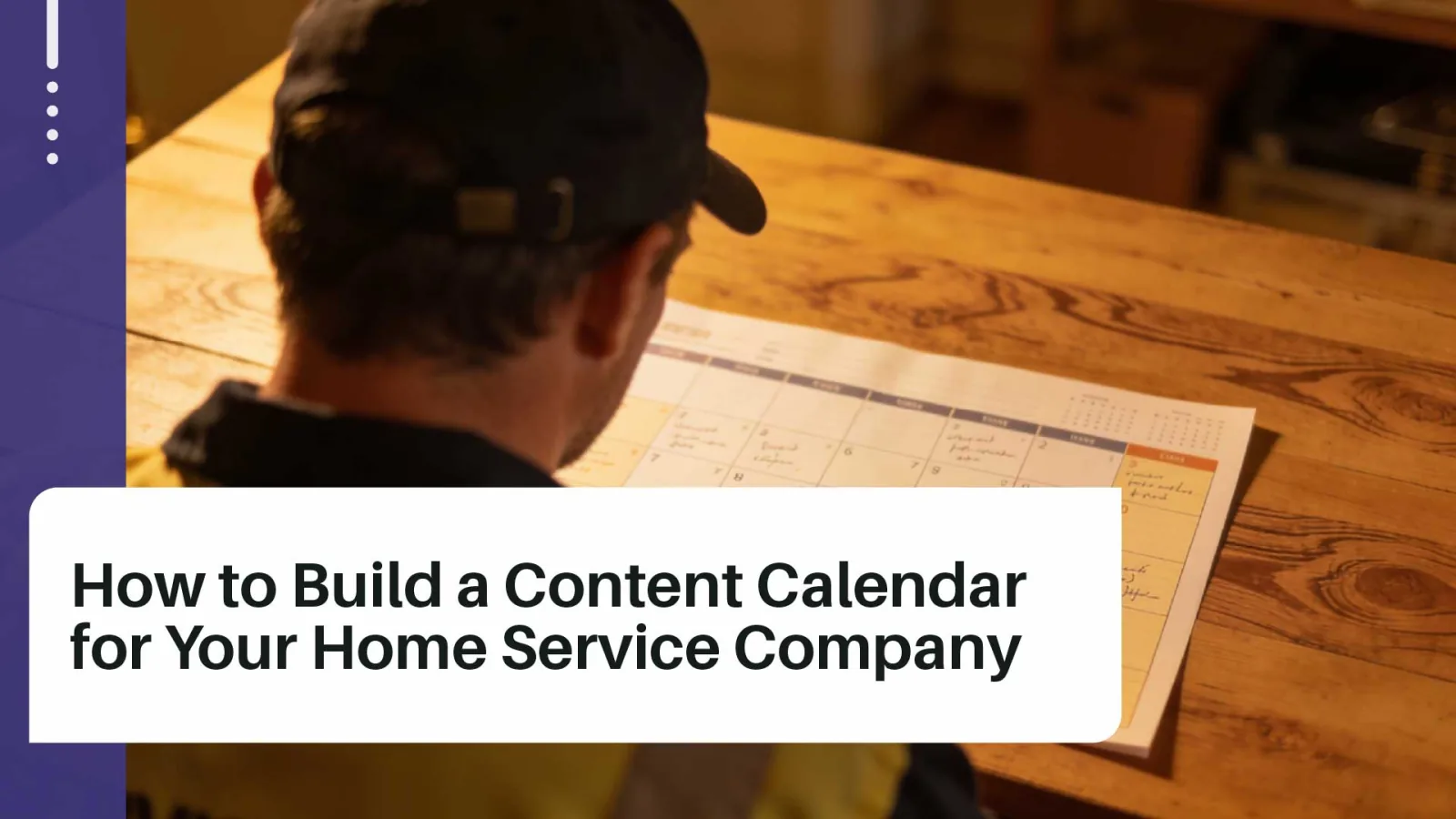
Most home service companies plan their content backward. They publish "spring AC tune-up tips" in April, right as the phones start ringing, then wonder why the post never shows up in search. A content calendar for your home service company fixes that timing problem. The companies that win local search aren't writing about what's busy today. They're writing about what will be busy in 60 to 90 days. This guide shows home services businesses how to build a calendar that leads demand instead of chasing it.
Think of it like planting a garden. You don't drop seeds in the ground the day you want tomatoes. You plant in spring, so you harvest in summer. Content works the same way. Google needs time to find a new page, rank it, and move it into a competitive position. If you publish your summer content in June, you've already missed the season.
Written By: Chad J. Treadway | July 06, 2026
Chad is a Partner and our Chief Smarketing Officer. He will help you survey your small business needs, educating you on your options before suggesting any solution. Chad is passionate about rural marketing in the United States and North Carolina. He also has several certifications through HubSpot to better assist you with your internet and inbound marketing.
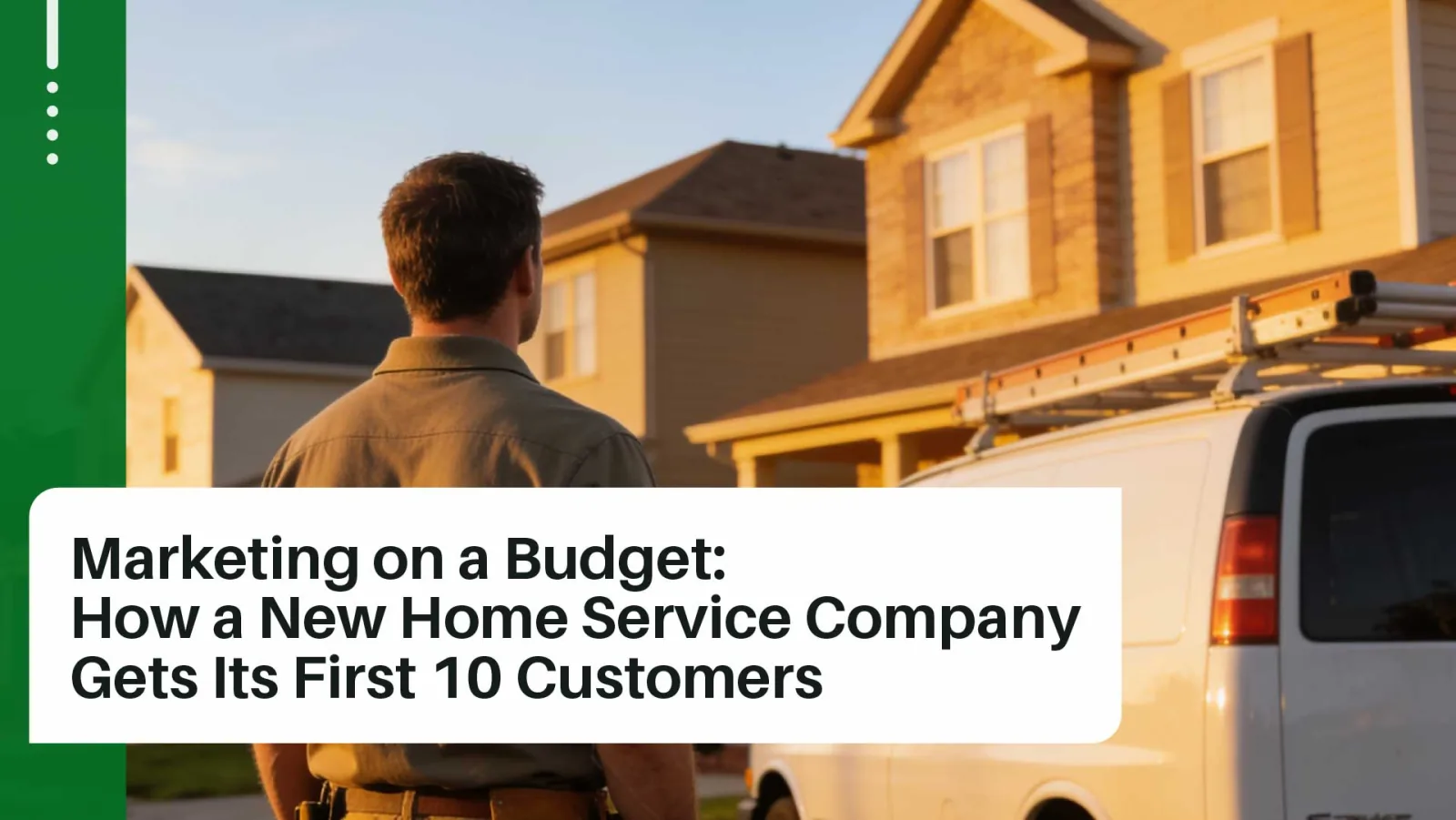
The big regional HVAC outfit across town runs a $15,000 monthly marketing budget. You have $200 and a work van with a coffee stain on the passenger seat. Sounds like a mismatch. It isn't. For a new home service company, the marketing budget matters far less than where you point it. We help home services companies sort the noise from the work that actually books jobs, and the honest truth is that your first 10 customers almost never come from paid ads.
If money is tight, you are in good company. Direct mail firm PostcardMania reported that 41% of small and midsize businesses spend less than $500 a month on advertising. The U.S. Small Business Administration says that it is fine for a while, because, as the Small Business Administration put it, "Tactics such as word-of-mouth, social media marketing and volunteering at community events are all virtually free ways to get your business in front of the public."
This is the $0 to $500 playbook: five neighborhood-level tactics that get a new contractor in front of local homeowners before you spend a dime on ads. Each one wins on proximity and trust, the two things the big company with the giant budget can't buy in your zip code.
Written By: Chad J. Treadway | July 03, 2026
Chad is a Partner and our Chief Smarketing Officer. He will help you survey your small business needs, educating you on your options before suggesting any solution. Chad is passionate about rural marketing in the United States and North Carolina. He also has several certifications through HubSpot to better assist you with your internet and inbound marketing.