You finally crossed the line from owner-operator to actual business owner. You have eight, fifteen, maybe twenty technicians on the road, the phones are ringing, and the reviews are stacking up faster than you can read them. Every one of those reviews wants a reply, and the people leaving them are watching to see if you bother. So are the people reading them later trying to decide who to call? Tools that promise to automate pest control review responses with AI sound like the obvious fix until you see the output and realize half of it reads like a chatbot from 2017. This guide walks pest management companies through how to keep the speed without losing the voice that got you here.
Cube Creative builds digital marketing systems for pest management companies across the country, and review response is one of the first places we see scaling operators either get a real edge or quietly hurt themselves. The tools have improved a lot. The way most companies use them has not. So let's get into what actually works.

Written By: Chad J. Treadway | May 05, 2026
Chad is a Partner and our Chief Smarketing Officer. He will help you survey your small business needs, educating you on your options before suggesting any solution. Chad is passionate about rural marketing in the United States and North Carolina. He also has several certifications through HubSpot to better assist you with your internet and inbound marketing.
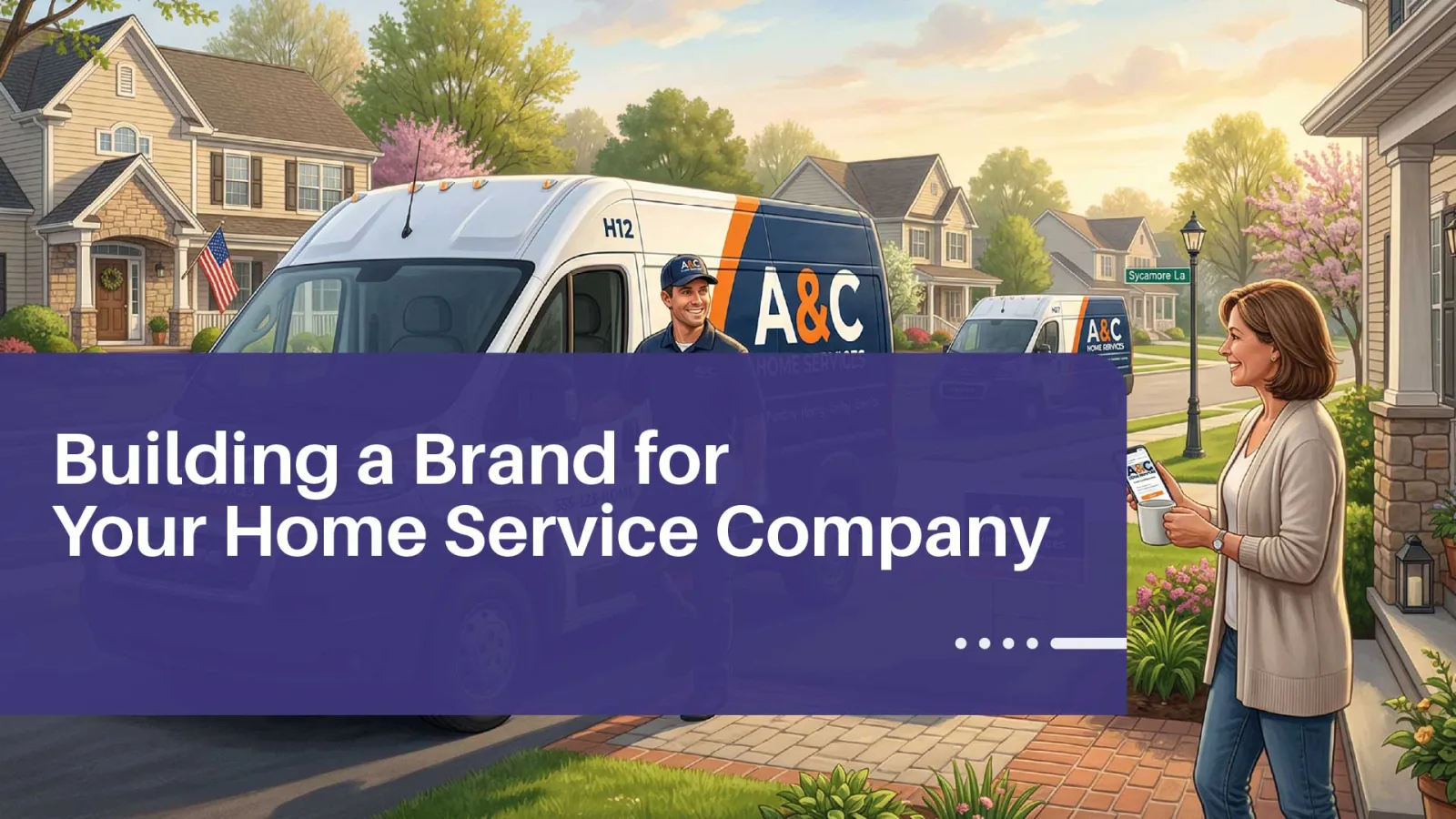
Think of your brand as your business's uniform. When your team shows up in mismatched outfits with different logos and colors, customers start wondering what you're about. That inconsistency costs you money.
Research by Lucidpress found that consistent brand presentation increases revenue by 23-33%. But here's the catch: according to Lucidpress and Demand Metric research, 95% of organizations have brand guidelines, but only 25% (1 in 4) consistently enforce them. A 2019 follow-up study found that 81% of companies still struggle with off-brand content sneaking into their marketing.
If you're running a home service business, every customer touchpoint matters. Your truck, your estimate, your Facebook post, your business card—they all tell your brand story. When that story changes depending on which employee is handling it, you lose trust. When customers see a polished, consistent brand, they see a professional business worth paying for.
This checklist helps you audit your visual brand right now. Print it out, grab a cup of coffee, and let's see what you're doing right and where the gaps are. As a small business owner, your brand is your most valuable asset. Let's make sure it's working as hard as you are.
Written By: Chad J. Treadway | May 05, 2026
Chad is a Partner and our Chief Smarketing Officer. He will help you survey your small business needs, educating you on your options before suggesting any solution. Chad is passionate about rural marketing in the United States and North Carolina. He also has several certifications through HubSpot to better assist you with your internet and inbound marketing.
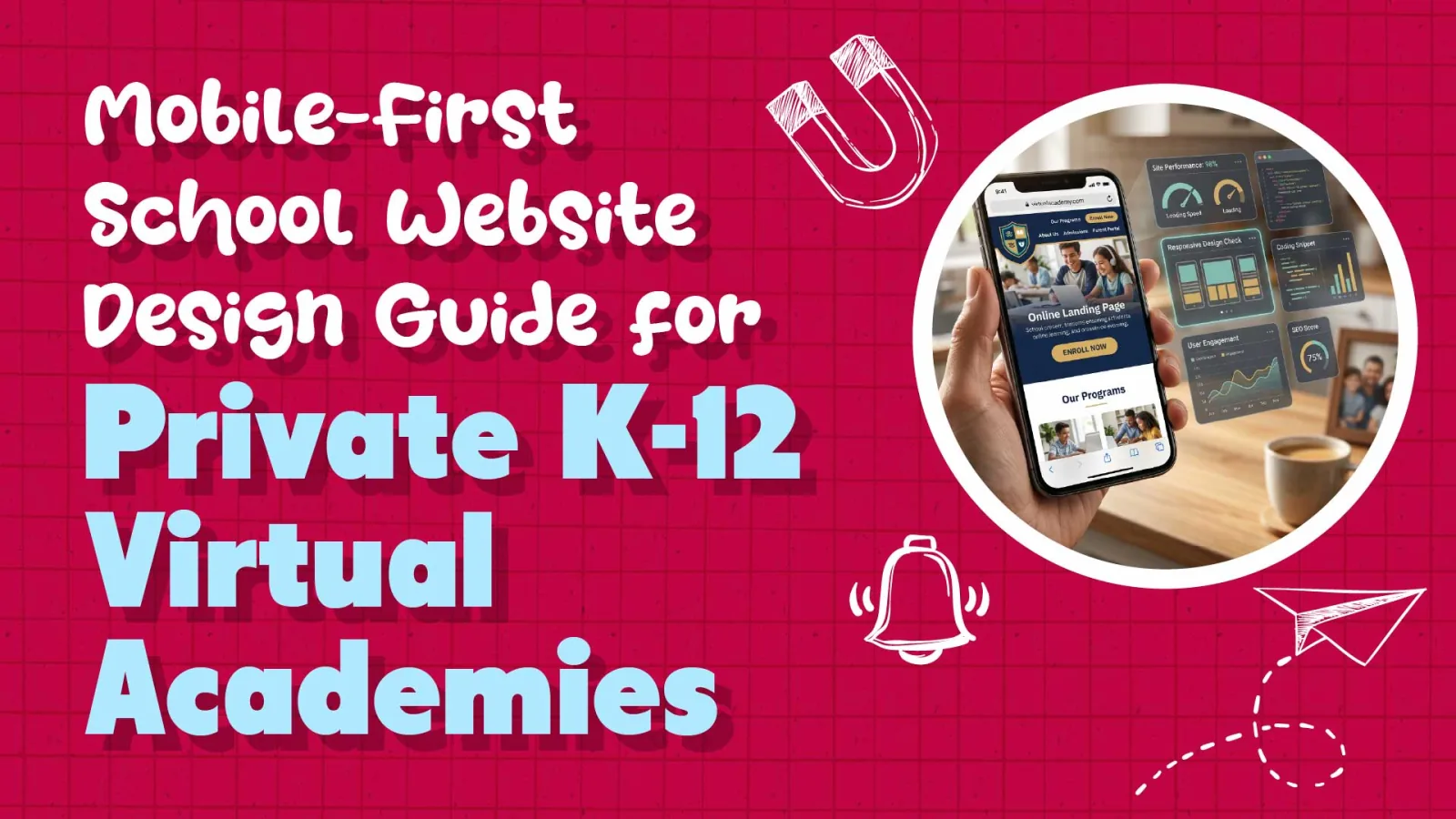
A brick-and-mortar school has a lobby, a front desk, a few brochures, and a campus tour that the building does most of the work for. A virtual academy has exactly one lobby, and it is the homepage on a prospective parent's phone at 9:47 p.m. For any private virtual academy, mobile-first school website design is not a best practice; it is the product. If the mobile experience is slow, hard to read, or cluttered, the parent never makes it into the classroom experience at all.
This guide is written for a Director of a K-12 virtual academy serving 250-500 students nationwide, with tuition between $8,000 and $15,000 and a marketing budget in the $50,000-$75,000 range. It covers the mobile traffic reality for school websites, the Core Web Vitals targets that affect Google rankings and conversions, the UX patterns that work on small screens, the conversion challenges specific to virtual schools, the mobile accessibility requirements you cannot skip, and the analytics setup that keeps mobile performance visible every month.

Written By: Adam Bennett | May 05, 2026
Adam is the president and founder of Cube Creative Design and specializes in private school marketing. Since starting the business in 2005, he has created individual relationships with clients in Western North Carolina and across the United States. He places great value on the needs, expectations, and goals of the client.
A homeowner sits on the edge of her bed at 2 a.m., staring at a small reddish-brown spot on the white sheet. She does not need a marketing funnel. She does not need a mid-funnel nurture sequence. She needs to know who to call. Whoever she finds, calls, trusts, and pays in the next 24 hours just won a $2,500 job. Most pest control owners I talk to are leaving money on this table because they treat bed bugs like a side service. They should be treating it like the flagship.
Bed bug marketing is not the same as ant marketing or roach marketing. The customer psychology is different. The treatment economics are different. The competitive set is different. Even the search behavior is different — emergency, mobile, deeply private, and ready to spend. For pest control companies willing to put in the work to position bed bug services correctly, the segment can become the most profitable line on the P&L. For companies that treat it as just another pest, it stays a margin sinkhole.
This guide walks through the strategy. We will cover pricing models, the consumer psychology you need to design around, the digital marketing tactics that actually convert (PPC, Local Services Ads, SEO, landing pages), the way to position bed bug services as premium without sounding gimmicky, and how to build the kind of operations workflow that lets you charge $2,500 without wincing. By the end, you should have a clear sense of where your bed bug program leaks revenue and how to fix it.
Written By: Chad J. Treadway | May 04, 2026
Chad is a Partner and our Chief Smarketing Officer. He will help you survey your small business needs, educating you on your options before suggesting any solution. Chad is passionate about rural marketing in the United States and North Carolina. He also has several certifications through HubSpot to better assist you with your internet and inbound marketing.