The best SEO services for pest control companies come down to three: Google Business Profile and local pack work, on-site technical and content SEO built around your service areas, and steady review plus local citation work. Buy those three and skip the rest until they are working.
That is the short answer. Three more questions decide whether you get value out of it, and this post covers each one: how organic SEO stacks up against Google Ads and Local Services Ads, what the three services should cost you, and how to tell a pest-control-specific agency from a generalist.
Now the part nobody puts in a sales deck. Most SEO proposals sent to pest control business owners bundle 30 line items into one monthly price, and half of those line items do almost nothing for a service-area business. SEO for pest control is a lot like a termite treatment: the work you cannot see from the curb is what holds the house up, and the decorative stuff on top does not stop anything from chewing. Knowing which three services carry the weight is how you stop paying for the decorative stuff.

Written By: Chad J. Treadway | September 02, 2026
Chad is a Partner and our Chief Smarketing Officer. He will help you survey your small business needs, educating you on your options before suggesting any solution. Chad is passionate about rural marketing in the United States and North Carolina. He also has several certifications through HubSpot to better assist you with your internet and inbound marketing.
If your school's website gets 10,000 visitors during enrollment season and converts at the private school average of under 2%, that's fewer than 200 inquiry form submissions. If you convert at 5%, that's 500. Same traffic, same ad spend, same SEO effort; 300 more families in your admissions pipeline because the website did its job.
That gap is what a school website conversion audit is designed to close. Not a redesign. Not a rebrand. A systematic review of the pages, forms, and pathways families use when they're deciding whether your school is worth a phone call. (If you need a broader look at your enrollment season website strategy, start there and come back here for the conversion-specific audit.)
For school admissions teams heading into the spring enrollment window, this is the highest-return project you can run right now. You've already spent the money driving traffic. The question is whether your website is converting that traffic into inquiries or quietly sending families to the school down the road.

Written By: Adam Bennett | September 01, 2026
Adam is the president and founder of Cube Creative Design and specializes in private school marketing. Since starting the business in 2005, he has created individual relationships with clients in Western North Carolina and across the United States. He places great value on the needs, expectations, and goals of the client.
You did not sit down five years ago and design a technology stack. Almost nobody did. You bought a scheduling tool because dispatch was a mess. You added call tracking because you could not tell which ads were working. Somewhere along the way, a CRM showed up, then a review tool, then a second thing that does half of what the first thing already does.
By the time you are running 60 or 80 technicians across several locations, that pile of tools is your pest control technology stack whether you planned it or not. We help regional pest control companies sort out what that stack should look like, and the honest answer for 2027 is that most operations your size are paying for redundancy, sitting on gaps, and guessing at the numbers that should be driving decisions.
This post is not a software roundup. It is an assessment framework. The point is to step back, look at the whole picture, and ask the questions a 75-technician operator should be asking about every tool they pay for. Once you know what you have, deciding where to spend in 2027 gets a lot easier. That investment decision is its own conversation, and we cover it separately.
Written By: Adam Bennett | August 28, 2026
Adam is the president and founder of Cube Creative Design and specializes in private school marketing. Since starting the business in 2005, he has created individual relationships with clients in Western North Carolina and across the United States. He places great value on the needs, expectations, and goals of the client.
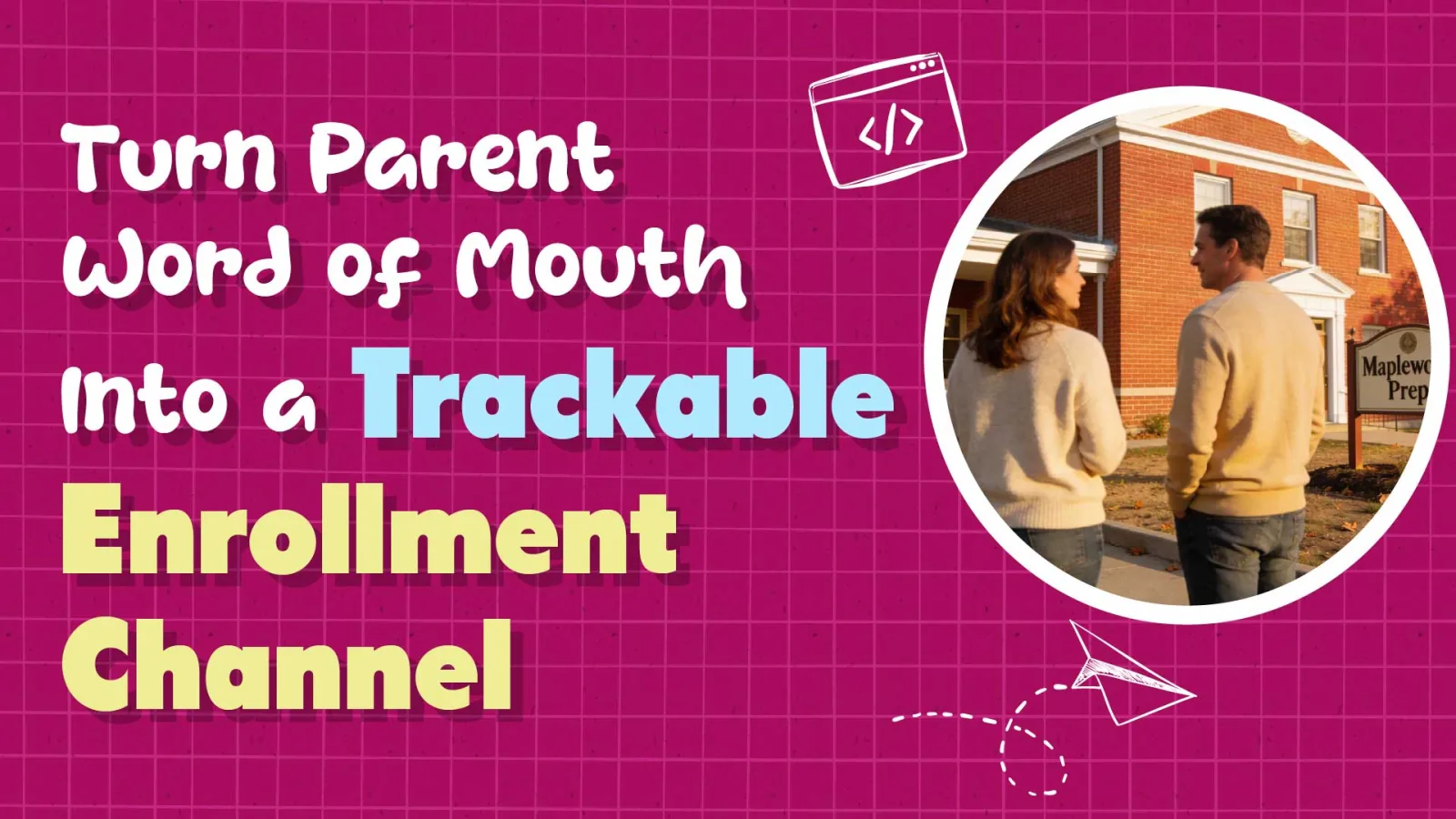
You have families who would recommend your school to a neighbor tomorrow. The trouble is you have never asked them to, and you do not have the ad budget your better-funded competitors spend to chase strangers. A school referral program solves both problems at once, and it is one of the few marketing moves that pays for itself. For the faith-based and independent schools we work with, it is often the highest-return option available to a principal who runs admissions, marketing, and half of everything else without a dedicated team.
This is not a piece about why word of mouth matters. That case is already settled, and we made it in detail in our guide to why word of mouth drives school enrollment. This is the build-it-yourself manual: how to design the incentives, track the results, write the rules, and defend the whole thing to a board that watches every dollar. If you have been treating recommendations as a happy accident, this is how you turn them into a channel you can count on.
Written By: Adam Bennett | August 28, 2026
Adam is the president and founder of Cube Creative Design and specializes in private school marketing. Since starting the business in 2005, he has created individual relationships with clients in Western North Carolina and across the United States. He places great value on the needs, expectations, and goals of the client.