
Picture two home services companies on the same street. Same trade, same size, and the same number of leads coming in every month from Google, referrals, and the phone. One books twice as many jobs as the other. The difference is not the ad budget, and it is not the reviews. It is what happens in the minutes and hours after a lead comes in. If you want to get more appointments without spending another dollar on advertising, that gap is where the money is hiding. We work with companies like yours that generate plenty of leads and still watch jobs slip away before anyone picks up a wrench.
Most owners react to a slow month by asking for more leads. That is like pouring more water into a bucket with holes in the bottom. The leads you already paid for are leaking out through slow responses, missed calls, and follow-up that never happens. Plug those holes first. It is cheaper, it is faster, and it works.

Written By: Chad J. Treadway | August 20, 2026
Chad is a Partner and our Chief Smarketing Officer. He will help you survey your small business needs, educating you on your options before suggesting any solution. Chad is passionate about rural marketing in the United States and North Carolina. He also has several certifications through HubSpot to better assist you with your internet and inbound marketing.
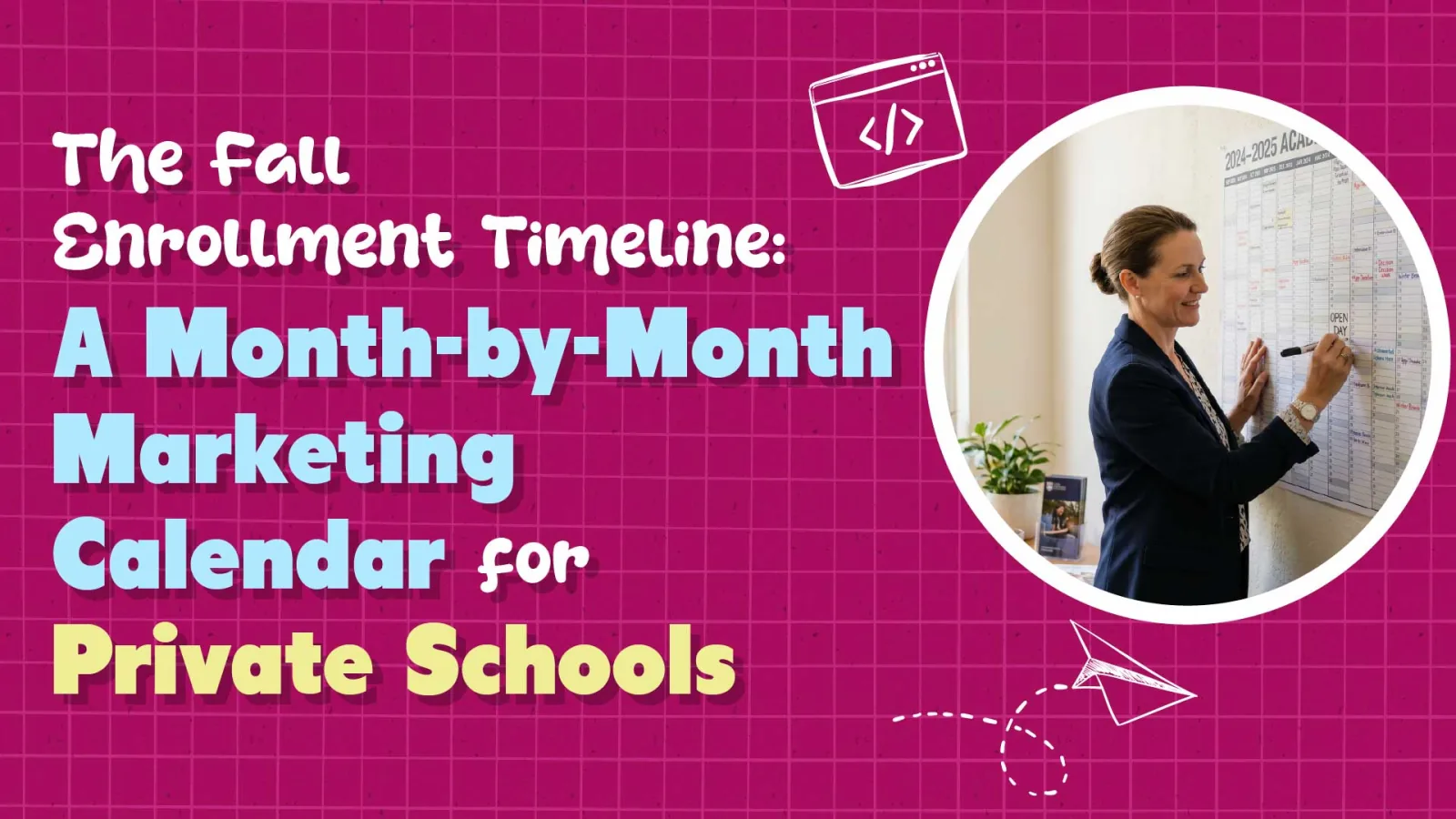
By the time a prospective family fills out your inquiry form, they have probably already read your tuition page, watched two of your videos, checked your reviews, and compared you against three other schools. They did all of it without telling you. If your marketing only kicks in after the inquiry, you are showing up to a conversation that started months ago. A fall enrollment timeline fixes that by putting your school in front of families during the long, quiet stretch when they are actually making up their minds.
This is the working calendar behind a healthy admissions year. It maps the full cycle, from August awareness campaigns through spring deposits and into summer re-enrollment. Your team knows what to launch, when to spend, and where to follow up. Cube Creative Design builds this kind of plan for private and independent schools, and the pattern below is the one we use to keep a full year from turning into a spring scramble.
Think of this as your master calendar. The three open-house pieces in this cluster cover the tactics of a single event. This piece sits one level up and shows how that event fits into the whole year. Let's walk the cycle month by month.

Written By: Adam Bennett | August 19, 2026
Adam is the president and founder of Cube Creative Design and specializes in private school marketing. Since starting the business in 2005, he has created individual relationships with clients in Western North Carolina and across the United States. He places great value on the needs, expectations, and goals of the client.
While your competitors are already thinking about winter hibernation, smart pest control operators know that fall isn't a slowdown—it's a setup for your most profitable quarter. The autumn months present a unique opportunity to shift from the high-volume, price-competitive summer season to a premium service period where profit margins can soar well above industry averages.
That said, if your phones are already quieter than they were in July, you're not misreading the market. Call volume does drop in the fall as summer one-time complaints — wasps, mosquitoes, ants — taper off. For operators counting on steady summer inbound, the first few slower weeks feel like the beginning of a real problem: open technician slots, less predictable revenue, and real uncertainty about how deep the dip will go.
This guide addresses both situations: the operator planning ahead to build their most profitable Q4, and the operator who needs to stabilize revenue right now. The playbook is the same. The urgency is different.
Most pest control businesses incorrectly view fall as the beginning of their "off-season." They cut back on marketing budgets, reduced staff hours, and essentially surrendered three months of prime revenue opportunity. Here's the thing, though: while mosquito and termite calls might decrease, the demand for high-margin exclusion and prevention services skyrockets as pests seek winter shelter. A National Pest Management Association survey found that 45 percent of rodent issues occur in the fall and winter, making this your golden season for the most profitable services in the industry.
This comprehensive guide will show you how to transform a fall from a revenue dip into your most profitable quarter by strategically marketing prevention-focused services that command premium pricing. You'll find month-by-month tactics, learn to identify the highest-value opportunities, and understand how different-sized operations can capitalize on this seasonal shift.
Written By: Chad J. Treadway | August 19, 2026
Chad is a Partner and our Chief Smarketing Officer. He will help you survey your small business needs, educating you on your options before suggesting any solution. Chad is passionate about rural marketing in the United States and North Carolina. He also has several certifications through HubSpot to better assist you with your internet and inbound marketing.

Long-form content takes time to create. A detailed guide, case study, report, ebook, or blog post can take days or even weeks to research and write.
Yet many businesses publish this content once and then move on to the next project.
That can waste a lot of its value.
Instead, you can turn useful long-form content into a digital resource that helps you collect leads. The process does not mean copying an old article into a PDF. It means taking useful information, improving it, and giving readers a clear reason to access it.
A good resource should solve a real problem. It should also give readers a simple next step.