
Three concrete shifts reshaped private school marketing between 2025 and 2027, and most happened in places a busy Head of School would never think to look. A tax law rewrote who can afford your tuition. Google quietly deleted a review channel schools spent a decade building. Families started asking chatbots where to send their kids. If your enrollment plan still reads like it was written in 2023, this is the year to fix that. This guide is built for the person who has to defend a marketing budget to a board of trustees, not the person deciding which Facebook post to promote this week. If you lead one of the private and independent schools trying to make sense of all this, here is what actually matters heading into the 2027 school year, and what you can safely ignore.

Written By: Adam Bennett | August 17, 2026
Adam is the president and founder of Cube Creative Design and specializes in private school marketing. Since starting the business in 2005, he has created individual relationships with clients in Western North Carolina and across the United States. He places great value on the needs, expectations, and goals of the client.
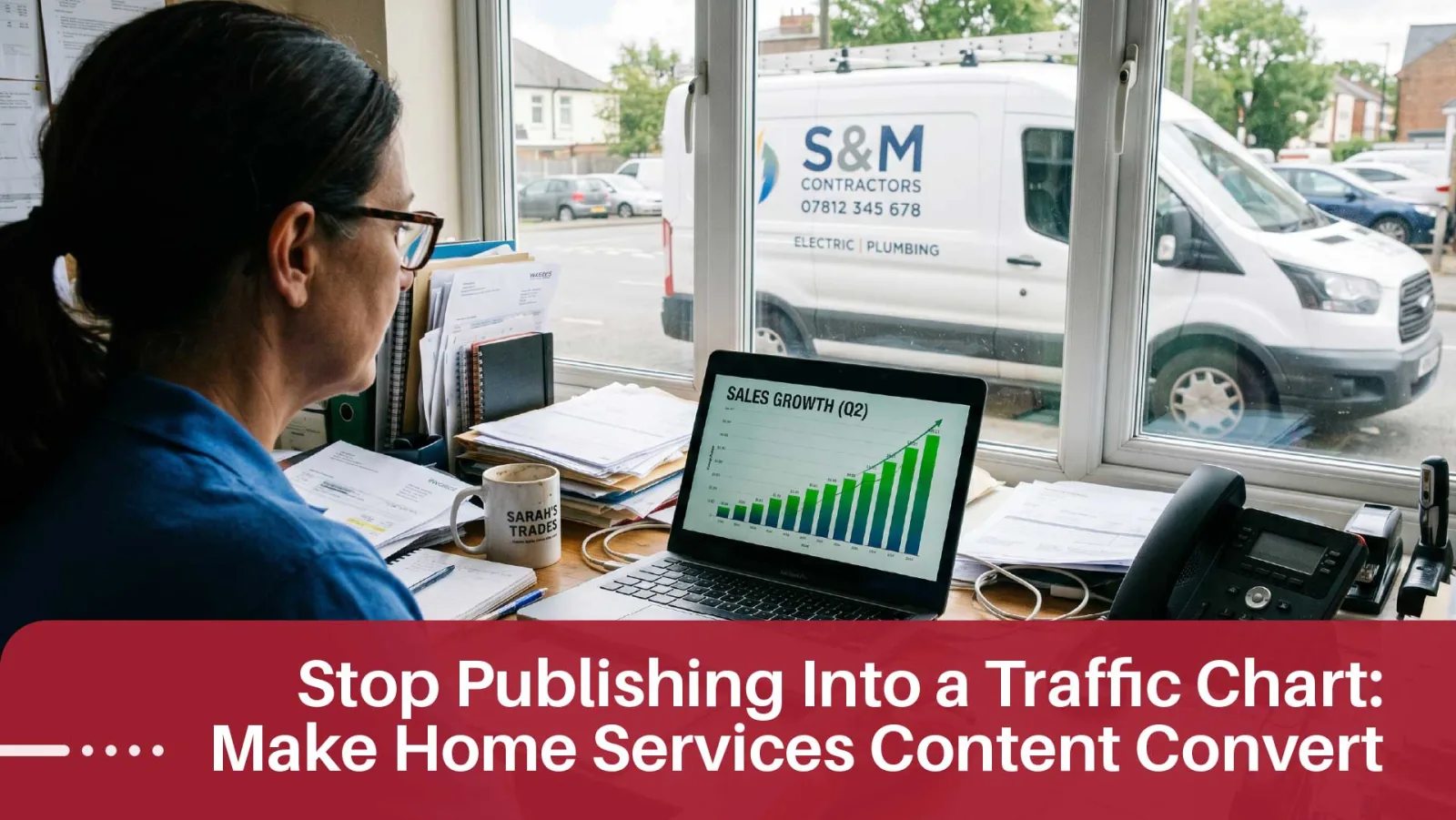
You can probably pull up your blog right now and count 40, 50, maybe 80 posts. Traffic is climbing. Your marketing manager sends a monthly report with a line going up and to the right. Here is the uncomfortable question: can you point to a single post that produced a booked job?
Most owners can't. That is the real problem with content marketing for home service businesses. Making content that gets read is easy. Making content that gets someone to pick up the phone is hard. We help home services companies close that gap every day, and the fix is almost never "write more." It is write with intent, connect each piece to the right page, and measure whether it fills the schedule.
This post draws a hard line between two kinds of content: the stuff that builds awareness and the stuff that books work. Both matter. But they need different structures, different calls to action, and different definitions of success. Get that distinction right, and your content stops being a cost center and starts acting like a salesperson who never clocks out.

Written By: Chad J. Treadway | August 17, 2026
Chad is a Partner and our Chief Smarketing Officer. He will help you survey your small business needs, educating you on your options before suggesting any solution. Chad is passionate about rural marketing in the United States and North Carolina. He also has several certifications through HubSpot to better assist you with your internet and inbound marketing.
Smart pest control owners treat fall content the way they treat a good exclusion job. You seal the house before the mice move in, not after you hear them in the walls at 2 a.m. A pest control fall content calendar works the same way: you publish before the search traffic shows up, so you are already ranking when homeowners start looking. The problem is that most pest control companies slow down on marketing in the fall, right when the season is about to get loud.
That timing gap is the opportunity. A PCT Magazine survey found that 44% of pest management professionals call fall their busiest rodent season, with another 22% naming winter. The demand is there. What most owners are missing is a plan they can actually run between service calls. So here it is: 12 weeks, four channels, one idea each. No theory, no lecture. Just open the drawer and grab the list.
Written By: Chad J. Treadway | August 17, 2026
Chad is a Partner and our Chief Smarketing Officer. He will help you survey your small business needs, educating you on your options before suggesting any solution. Chad is passionate about rural marketing in the United States and North Carolina. He also has several certifications through HubSpot to better assist you with your internet and inbound marketing.
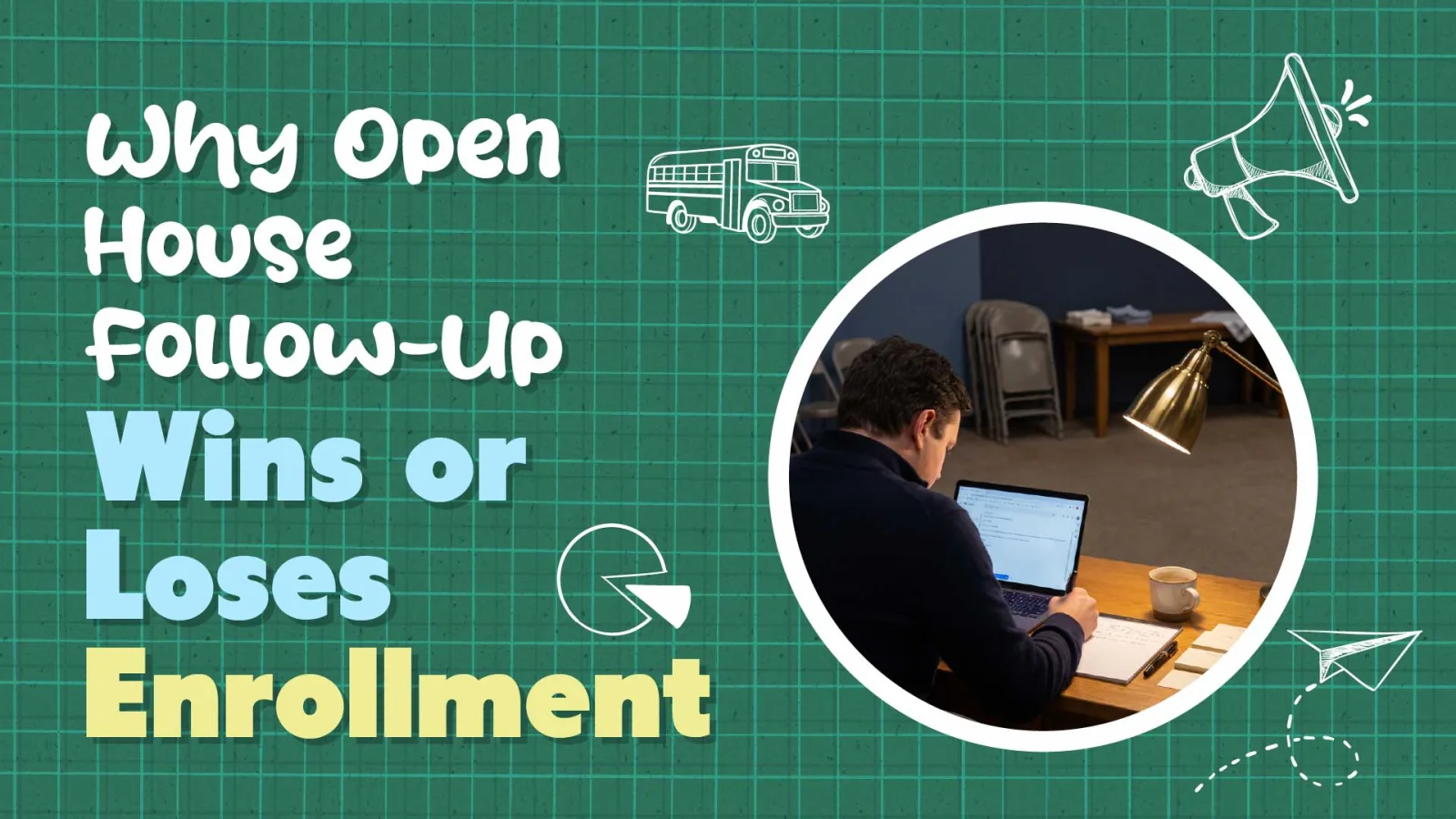
The open house is over. The cookies are gone, the parking lot is empty, and your admissions team is running on fumes. Here is the uncomfortable part: the event you spent six weeks planning did not decide who enrolls. What happens in the next 24 hours does. Open house follow-up is where enrollment is actually won or lost, and most schools treat it like an afterthought — a thank-you email sent whenever someone finally gets around to it.
That afterthought is expensive. The stretch between "attended your event" and "submitted an application" is exactly where a warm family either builds momentum or quietly cools off and picks the school down the road. If you own the follow-up process at your school, this is your highest-impact window, and it is the same problem we help school admissions teams solve every fall. This post picks up the moment your event ends and walks through the nurture strategy that converts attendees into applicants: how fast to respond, what to send, how to segment your list, and where technology helps versus where it just gets in the way.
Written By: Adam Bennett | August 14, 2026
Adam is the president and founder of Cube Creative Design and specializes in private school marketing. Since starting the business in 2005, he has created individual relationships with clients in Western North Carolina and across the United States. He places great value on the needs, expectations, and goals of the client.